Camera IQ
Camera IQ
The first camera experience manager. Brand new worlds.
My Role
Product Manager (Jun 2020 - May 2022)
- Owned the strategy and delivery of numerous product features, working directly with a remote team of 18 engineers to help grow the first camera experience manager to 30 customers in 2 years
- Served as a resident expert of the company's product and educated internal and external users via workshops and customer success sessions
- Owned the product requirements for Scheduled Publishing, a highly requested feature from customers that enabled easy planned release of AR Experiences to social media, delivered to the platform within a 3 month development timeline
- Owned the requirements, design, and delivery of an internal product for managing users, teams, licenses, and product content
- Contributed to technical brainstorms and discussions around technology in the AR/VR space
- Troubleshooted customer issues in AWS Cloudwatch/Lambda and suggested technical optimizations and improvements
- Created custom AR Experiences in Lens Studio and Spark AR for 20 different customer campaigns over the course of 6 months as an intern
- Contributed directly to dev-ops automation code in Python for the collection of customer analytics from Snapchat, Facebook, and Instagram
- Created extensive platform analytics experiences in Tableau from data gathered via MySQL
- Contributed directly to feature design in Figma
Technologies Used
Gallery
Project Details
Problem & Context
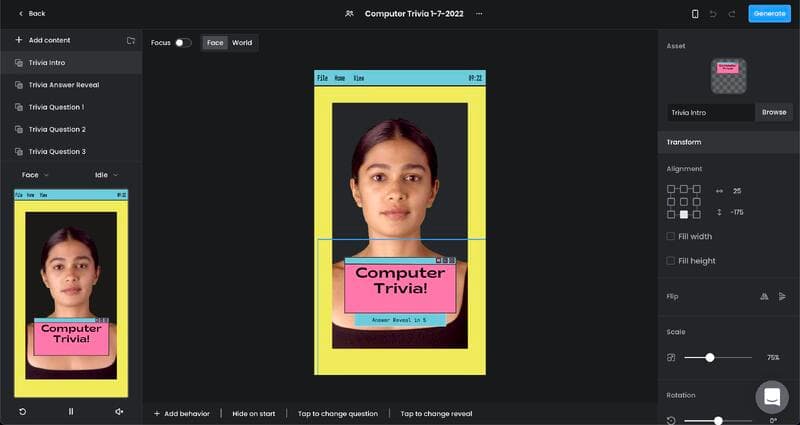
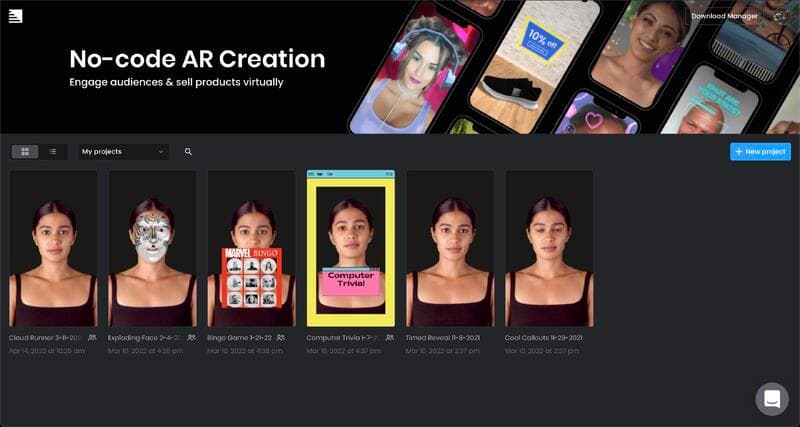
Marketers struggled to create and deliver captivating camera experiences at scale. The complexity of integrating OS platforms, AR toolkits, and native apps into a cohesive experience was a significant barrier. Brands needed a unified solution to manage camera marketing experiences that combined experience design with analytics.
My Contributions
As Product Manager, I owned the strategy and delivery of numerous product features, working directly with a remote team of 18 engineers to help grow the first camera experience manager to 30 customers in 2 years. I served as a resident expert of the company's product and educated internal and external users via workshops and customer success sessions. I owned the product requirements for Scheduled Publishing, a highly requested feature from customers that enabled easy planned release of AR Experiences to social media, delivered to the platform within a 3 month development timeline. I owned the requirements, design, and delivery of an internal product for managing users, teams, licenses, and product content. I contributed to technical brainstorms and discussions around technology in the AR/VR space. I troubleshooted customer issues in AWS Cloudwatch/Lambda and suggested technical optimizations and improvements. I created custom AR Experiences in Lens Studio and Spark AR for 20 different customer campaigns over the course of 6 months as an intern. I contributed directly to dev-ops automation code in Python for the collection of customer analytics from Snapchat, Facebook, and Instagram. I created extensive platform analytics experiences in Tableau from data gathered via MySQL. I contributed directly to feature design in Figma.
Impact & Results
Camera IQ became the first camera experience manager, enabling brands to deliver captivating camera marketing experiences at scale. The platform successfully integrated AR platforms into a single fabric, allowing marketers to create new worlds that customers love to explore. The product helped brands thrive at the intersection of experience design and social media analytics, transforming how companies approach camera-based marketing.
Challenges & Solutions
One of the primary challenges was managing the complexity of integrating multiple technology platforms (OS platforms, AR toolkits, native apps) into a unified experience. I had to balance technical feasibility with user needs while working across multiple teams. Additionally, defining meaningful success metrics for AR/VR experiences required deep collaboration with data analysts and understanding of social media analytics. Troubleshooting AWS infrastructure issues and optimizing Lambda functions required technical problem-solving skills while maintaining focus on product strategy and user experience.